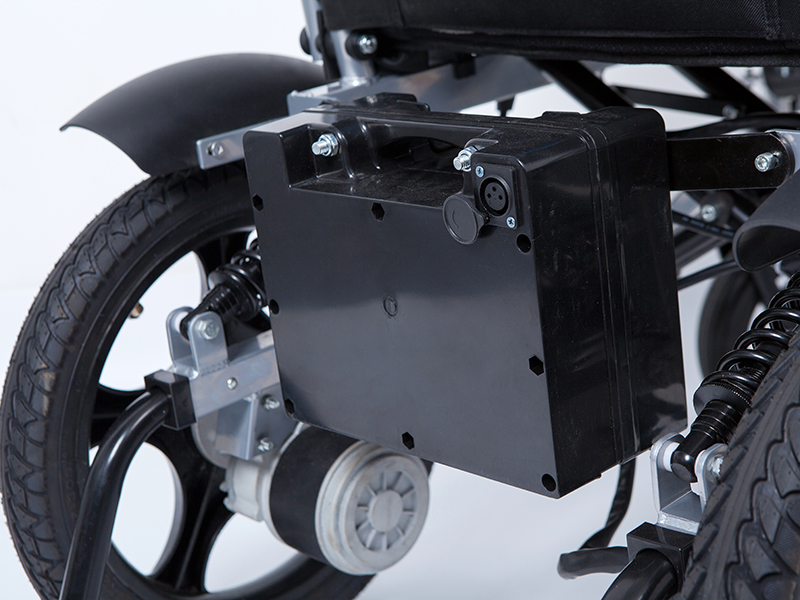
Wheelchair batteries come in various shapes and installation methods, such as external, internal, inserted, and embedded types. Currently, the most common battery materials on the market are lead-acid, lithium iron phosphate (LiFePO4), and NCM lithium.
Classification of Wheelchair Batteries
When choosing an electric wheelchair, the type of battery is a crucial factor. Which type should you choose? Let’s dive into the characteristics of these three types.
- Lead-Acid : It is cheaper option, with the highest thermal stability. It offers approximately 300-500 charge-discharge cycles and requires regular charging and discharging. The charging time is longer, and the weight and size are the largest. It has significant loss in cold temperatures but has a well-established recycling system with high recycling efficiency.
- Lithium Iron Phosphate: Has a larger energy density and better thermal stability, with more than 2000 charge-discharge cycles. It charges faster, is smaller and lighter, and is environmentally friendly with no harmful materials.
- NCM: Has heavier energy density and poor thermal stability. It offers around 1500-2000 charge-discharge cycles, high charge/discharge efficiency, and the smallest size and weight. It has less loss in cold temperatures but contains higher amounts of heavy metals, with a more complex recycling process.
Factors to Consider When Choosing a Wheelchair Battery
When deciding which type to choose for your wheelchair, several factors need to be considered, including price, weight, capacity, usage environment, safety, and environmental impact. Here’s a comparison of the three types of batteries based on key parameters:
- Price: Lead-acid is very affordable, followed by lithium iron phosphate, with NCM lithium being will more expensive. For a 24V 12Ah, the approximate prices are $50, $80, and $100, respectively.
- Weight: Lead-acid is heavier, followed by lithium iron phosphate, and NCM lithium will more lighter. This is a reference table for the weights of different specifications (24V 10Ah, 20Ah, 30Ah):
| Type | 24V 10Ah | 24V 20Ah | 24V 30Ah |
|---|---|---|---|
| Lead-Acid | ~9kg | ~15kg | ~20kg |
| Lithium Iron Phosphate | ~2.5kg | ~5kg | ~7kg |
| NCM | ~1.5kg | ~3.5kg | ~5.5kg |
- Temperature Range: Under normal usage, the range difference between different types of the same capacity is minimal. However, in low temperatures, different materials have varying levels of capacity loss. The table below compares the loss for each type at temperatures ranging from -20°C to 20°C.
| Temperature | Lead-Acid | Lithium Iron Phosphate | NCM |
|---|---|---|---|
| -20°C | ~50% capacity, charging efficiency significantly decreases | ~60-70% capacity, charging efficiency slows | ~80-90% capacity, charging efficiency slows |
| -10°C | ~50-60% capacity, charging efficiency slows | ~70-80% capacity, charging efficiency slightly slows | ~90-95% capacity, charging normal |
| 0°C | ~60-70% capacity, charging efficiency slightly slows | ~80-90% capacity, charging normal | ~95-100% capacity, charging normal |
| 10°C | ~70-80% capacity, charging normal | ~80-90% capacity, charging normal | No effect |
| 20°C | ~90% capacity, charging normal | ~95-100% capacity, charging normal | No effect |
- Safety Comparison: The thermal stability and impact resistance of these three types differ. If overall safety is a key concern, lithium iron phosphate batteries are the most reliable. Below is a comparison of their thermal stability and impact resistance:
| Type | Thermal Stability | Impact Resistance |
|---|---|---|
| Lead-Acid | Moderate, thermal runaway temperature: 150-250°C | Moderate (Good resistance to impact, avoids short circuit) |
| Lithium Iron Phosphate | High, thermal runaway temperature: >250°C | High (Stable structure, resistant to damage) |
| NCM | Moderate, thermal runaway temperature: 150-200°C | Moderate (Avoid impact) |
- Environmental Comparison: The environmental impact of each type during production, use, and disposal varies. Among them, lithium iron phosphate is more environmentally friendly. Below is a comparison of their environmental attributes:
| Stage | Lithium Iron Phosphate | NCM | Lead-Acid |
|---|---|---|---|
| Production Process | High | Medium (Concerns about material mining) | Low (Heavy metal pollution) |
| Usage | High (No pollutant release) | High (No pollution under normal use) | Medium (Potential acid fumes) |
| Disposal and Recycling | High (Recyclable, no pollution) | Medium (Requires proper disposal of heavy metals) | Low (Heavy metal pollution, needs special handling) |
- Other Factors Affecting the Selection: When choosing a wheelchair battery, appearance, plug type, ease of disassembly, and replacement should also be considered. Based on the above comparisons, you should now have a better understanding of the type of battery that fits your needs.
Important Considerations: Battery Compatibility for Electric Wheelchairs
Typically, electric wheelchairs can be equipped with different specifications and types. However, due to the following factors, not all battery types and specifications are suitable for every wheelchair. It’s recommended to consult with the manufacturer to confirm whether it can be customized or replaced for your wheelchair.
- Installation Methods: Electric wheelchair batteries come in side-mounted, rear-mounted, bottom-mounted, and embedded types. When changing battery specifications and types, you need to check with the manufacturer for compatibility.
- Motor and Controller Compatibility: Different motors and controllers have specific battery requirements. Consult the manufacturer to confirm if the battery is compatible with your wheelchair’s motor and controller.
- Wheelchair Structure: Some lightweight wheelchairs have space limitations, which may only support smaller one.
- Charging and Connections: Different electric wheelchairs have varying charging ports and connections. Ensure compatibility with the manufacturer to avoid any issues.
FAQs
Q: What should I pay attention to when replacing the battery on my electric wheelchair?
A: You need to check the parameters and connector types of the original one. It’s recommended to replace it with a factory-specified battery or consult with the vendor.
Q: I have high safety and environmental standards, which wheelchair battery is best for me?
A: The lithium iron phosphate is the safest and most environmentally friendly option.
Q: I will use my electric wheelchair in temperatures below 0°C, which wheelchair battery should I choose?
A: We recommend using the NCM, as it has the least loss and charging efficiency impact in low temperatures.
Q: Will the wheelchair battery be affected if not used for a long time?
A: If the electric wheelchair is not used for an extended period, we recommend periodically charging the battery, especially for lead-acid.