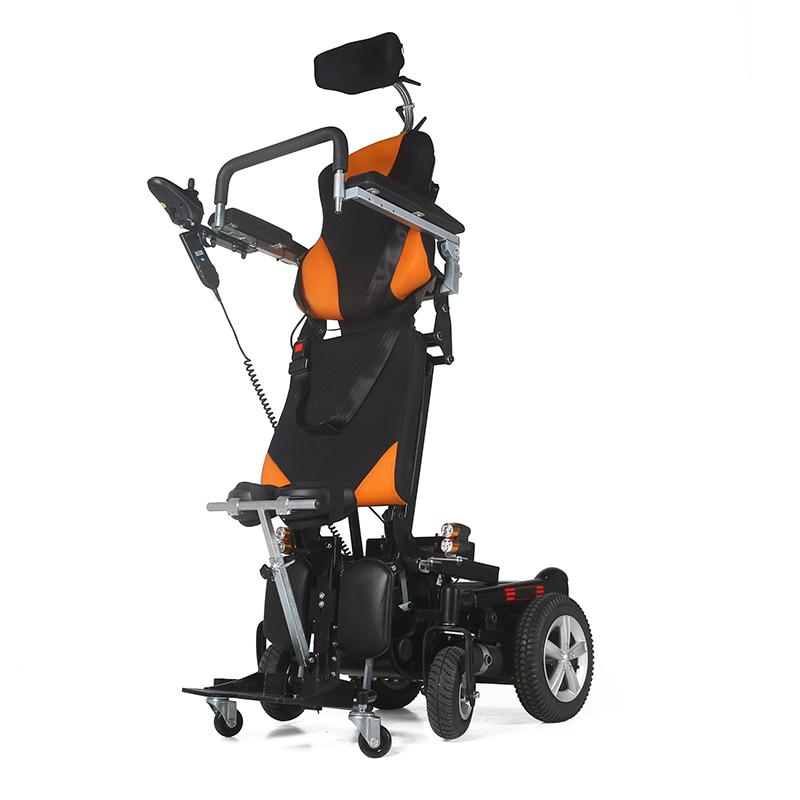
Standard mobility devices often fall short in specific daily scenarios, such as dining at a table, working at a desk, or accessing high shelves. Specialized solutions like lifting and standing wheelchair models address these limitations effectively. Let’s explore their key features and practical applications.
Lifting Wheelchairs: Practical Adjustments for Daily Tasks
These designs are categorized into two types:
- Standard Lifting Models: Adjustable seat height accommodates tasks like reaching shelves or using tables.
- Deluxe Lifting Models: Includes advanced features such as reclining or lateral seat adjustments, enhancing usability.
Types of Standing Wheelchair
Standing wheelchair designs come in various types to suit diverse needs:
- Manual Variants: Gas springs enable posture adjustment and movement.
- Single-Function Electric Types: Provide motorized adjustments but rely on manual movement.
- Semi-Reclining Electric Designs: Motorized movement combined with limited reclining capabilities.
- Fully Reclining Models: Combine sitting, upright, and reclining positions into one versatile solution.

Considerations Before Choosing a Standing Wheelchair
These models offer unique benefits but require careful consideration:
- Ease of Use: Functions are joystick-controlled, demanding practice for mastery. External caregiver controls can be added if needed.
- Weight and Height Limits: Compatibility with user specifications ensures safety.
- Space Requirements: Multifunctional devices are heavier, requiring more storage than standard designs.
Pricing Guide: Finding the Right Standing Wheelchair
Budget is often crucial when selecting mobility aids. Here’s a general price breakdown:
- Under $1,000: Manual and basic electric models, plus some lifting designs.
- $1,000–$2,000: Covers most lifting options and semi-reclining types.
- Above $2,000: Premium reclining and advanced standing wheelchair designs.

Comparing Usage Scenarios
Home Environment:
- With caregiver support, both types perform well during daily activities.
- Independent users benefit from standing wheelchair models, offering flexibility over extended use.
Outdoor Activities:
- Lifting options suit shopping or short outings.
- For scenic views or sunbathing, upright models offer added functionality.
- Avoid uneven terrain while upright to prevent tipping.
Customization Options for Enhanced Functionality
- Battery: Standard or larger capacities are available based on usage needs.
- Motor: Worm gear motors ensure stability on diverse surfaces.
- Special Needs: Custom modifications address unique user requirements.
Additional Features for Advanced Standing Wheelchair Models
- Off-Road Capabilities: Adapted for rugged terrains using powerful motors and batteries.
- Rehabilitation Support: Adjustable designs paired with overhead supports aid recovery.
- Climbing Functionality: Rare but customizable, combining upright and stair-climbing capabilities.

FAQs
Q: Why are standing wheelchair models more expensive than lifting options?
A: Fully reclining and multifunctional designs involve advanced engineering, increasing costs.
Q: What happens if the user struggles with operation?
A: Most controls are integrated into joysticks. Caregiver-controlled remotes can also be installed.
Q: How can compatibility be ensured?
A: Share details like height, weight, and usage scenarios with manufacturers for tailored recommendations.
Q: How should errors be handled during use?
A: Pause operation, consult the manual, or contact the manufacturer for assistance. Resume only after resolving the issue.